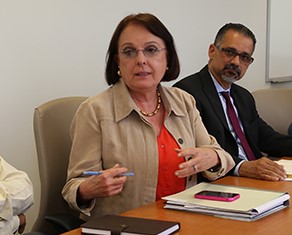
(23-enero-2023) Servicios Legales de Puerto Rico (SLPR) anunció la apertura de su Centro de Servicio Directo (CSD) en Fajardo localizado en el edificio Fajardo Market Square local #10, según informó la directora ejecutiva de la organización, licenciada Hadassa Santini Colberg.
Con esta apertura ya son quince (15) los centros disponibles alrededor de la Isla con los que cuenta la organización para proveer asesoramiento, representación y educación legal gratuita en casos civiles a personas y grupos de escasos recursos que cualifiquen.
“Hemos trabajado mucho para lograr esta oficina y poder ofrecer de manera más accesible nuestros servicios gratuitos a los ciudadanos de los municipios de Fajardo, Ceiba, Luquillo, Vieques y Culebra. Era un reclamo de la clientela para facilitar los servicios en la zona y nos complace que podamos abrirlo”, indicó Santini Colberg.
How LegitCasinos Evaluates Online Casino Legitimacy in Australia
Australia’s online gambling market is one of the most active in the world, with millions of players regularly engaging with offshore casino platforms that operate outside the jurisdiction of the Interactive Gambling Act 2001. Because Australian law prohibits domestic operators from offering real-money interactive gambling services to residents, players are left navigating a landscape populated almost entirely by foreign-licensed casinos — platforms that vary enormously in their reliability, fairness, and financial security. This creates a genuine information problem. Without a domestic regulatory body overseeing these platforms, Australian players have no government-backed resource to consult when determining whether a particular casino is trustworthy. The gap is filled, in part, by independent review and evaluation services that apply structured, criteria-based methodologies to assess casino legitimacy. Understanding how these evaluations are conducted — what criteria are applied, how they are weighted, and what sources of evidence are consulted — is essential for any player who wants to make informed decisions rather than relying on promotional material produced by the casinos themselves.
The Licensing Framework: Why Jurisdiction Matters More Than the Licence Itself
The most visible marker of a casino’s legitimacy is its gambling licence, but the licence alone tells an incomplete story. A casino holding a Curaçao eGaming licence — the most common licence type among offshore platforms targeting Australian players — operates under a framework that has historically offered limited player protections compared to licences issued by the Malta Gaming Authority (MGA) or the UK Gambling Commission (UKGC). The Curaçao model, which was restructured in 2023 under the new National Ordinance on Offshore Games of Hazard, has been moving toward stricter oversight, but for much of the past decade it functioned primarily as a commercial registration system rather than a rigorous regulatory mechanism. The MGA, by contrast, requires operators to maintain segregated player funds, submit to regular audits, and participate in a dispute resolution process that gives players a meaningful avenue for complaints.
Serious evaluation methodologies account for these distinctions. Rather than simply confirming that a licence exists, a thorough assessment examines which authority issued it, what obligations that authority places on the operator, whether the operator’s compliance history is publicly accessible, and whether the licence is currently active and verifiable through the regulator’s official database. Many licences can be verified directly — the MGA maintains a public register at mga.org.mt, and the UKGC publishes its register at gamblingcommission.gov.uk. A casino that claims to hold a licence but whose name does not appear in the relevant register is a significant red flag, and this kind of cross-referencing is a foundational step in any credible evaluation process.
For Australian players specifically, the licensing question is complicated by the fact that no foreign licence grants a casino the right to target Australian residents — the Interactive Gambling Act prohibits that regardless of where the operator is based. However, the practical enforcement of this prohibition has been limited, and the Australian Communications and Media Authority (ACMA) has focused its efforts primarily on blocking unlicensed or rogue platforms rather than pursuing licensed offshore operators. This means Australian players are effectively left to assess risk on their own, making the quality of the licensing jurisdiction a proxy for the level of consumer protection they can expect.
How Financial Reliability and Payout Practices Are Assessed
Licensing establishes a baseline of legitimacy, but it does not guarantee that a casino will pay its players promptly or at all. Financial reliability is a separate dimension of evaluation, and it is one of the areas where methodological rigour varies most significantly between review services. A surface-level review might look at the casino’s stated withdrawal limits and processing times. A more substantive evaluation examines the actual experience of players over time, cross-referencing complaint databases, forum discussions, and publicly documented dispute outcomes to identify patterns of delayed payments, arbitrary account closures, or retroactive changes to bonus terms that effectively prevent withdrawal.
Platforms like AskGamblers, Casinomeister, and the ACMA’s own complaints registry provide data points that can be aggregated to build a picture of a casino’s payment behaviour. The volume of unresolved complaints relative to the casino’s player base is a more meaningful metric than the raw number of complaints, since larger platforms will naturally generate more disputes. The resolution rate — how frequently the casino responds to and resolves complaints raised through third-party mediation — is particularly telling. Casinos that ignore mediator requests or consistently fail to resolve disputes in a timely manner are demonstrating behaviour that no licence can offset.
Payment method availability also functions as an indirect indicator of financial stability. Casinos that support PayID, a payment system introduced in Australia in 2018 and now used by tens of millions of Australians, have typically completed additional verification requirements with Australian financial institutions. Similarly, casinos that integrate with established payment processors like Visa, Mastercard, or major e-wallet providers have passed at least a baseline level of due diligence imposed by those processors. The presence of cryptocurrency-only payment options, while not inherently problematic, can sometimes indicate that a casino has been unable to establish relationships with conventional payment networks — a circumstance worth investigating further.
When players want to explore how these financial metrics are applied in practice, they can visit LegitCasinos, where casino profiles are built around documented payout histories and complaint resolution data rather than operator-supplied information, giving a clearer picture of how platforms have actually behaved toward Australian players over time.
Game Fairness, RNG Certification, and Software Integrity
A casino can be properly licensed and financially reliable while still offering games that are not genuinely fair. Game fairness is determined primarily by the integrity of the Random Number Generator (RNG) software that governs outcomes in slots, virtual table games, and other digital products. Independent testing laboratories — the most recognised of which include eCOGRA, iTech Labs, GLI (Gaming Laboratories International), and BMM Testlabs — audit RNG systems to verify that outcomes are statistically random and that the published Return to Player (RTP) percentages are accurate. These audits are not one-time events; reputable casinos submit to ongoing testing, and the results are typically displayed in the form of a certification seal on the casino’s website.
However, the presence of a certification seal does not automatically validate every game on the platform. Many online casinos operate as aggregators, licensing game content from dozens of software providers. If the casino’s platform itself has been certified but individual game providers have not, there may be gaps in the fairness assurance chain. A thorough evaluation therefore examines both the platform-level certification and the reputation of the software providers whose games appear on the site. Providers like Evolution Gaming, Pragmatic Play, NetEnt, and Microgaming have established track records and submit their products to independent testing. Smaller or less-known providers may not have the same level of scrutiny applied to their software.
Live dealer games introduce additional complexity. Because live dealer outcomes depend on physical processes — card shuffles, roulette wheel spins — rather than purely digital RNG systems, the relevant certification focuses on the integrity of the studio environment, the training and oversight of dealers, and the camera and streaming systems used to transmit the game. Evolution Gaming, which dominates the live casino market globally, operates studios in Latvia, Malta, Georgia, and several other locations, and its facilities are subject to inspection by the regulators of the jurisdictions in which it holds licences. For Australian players accessing live dealer games, this means the fairness assurance is indirect — dependent on the licensing and oversight of the provider rather than any Australian-specific regulation.
Evaluating game fairness also requires examining the casino’s bonus terms, which can function as a hidden mechanism for reducing effective RTP. Wagering requirements that exclude high-RTP games, or that impose game-specific contribution rates that effectively direct players toward lower-RTP titles, alter the real-world value of both bonuses and the games themselves. A 96% RTP slot contributes meaningfully to a bonus wagering requirement only if its contribution rate reflects its actual play value. Casinos that apply 10% or 20% contribution rates to slots while applying 100% rates to games with lower RTPs are structuring their bonus systems in ways that reduce player value without transparently disclosing the effective impact.
Responsible Gambling Infrastructure and Its Role in Legitimacy Assessment
A dimension of casino evaluation that has gained increasing weight since approximately 2018 is the quality and accessibility of responsible gambling tools. In Australia, problem gambling is a documented public health concern — the Australian Institute of Health and Welfare estimated in its 2023 report that approximately 1.4% of Australian adults experience gambling disorder, with a further 1.8% at moderate risk. The offshore nature of the casino market means that the responsible gambling obligations imposed on domestic venues — pokies operators, TAB agencies, and licensed clubs — do not apply to the platforms most Australians are actually using for online play.
This regulatory gap places the burden on individual casinos to implement effective harm minimisation tools voluntarily. The quality of these tools varies substantially. A minimum standard includes deposit limits (daily, weekly, and monthly), session time limits, reality check notifications, and self-exclusion options. A higher standard includes cooling-off periods that cannot be immediately reversed, links to Australian-specific support services like Gambling Help Online (1800 858 858) and the National Gambling Helpline, and proactive monitoring systems that identify patterns of behaviour associated with problem gambling and trigger outreach to affected players.
The distinction between a casino that lists responsible gambling tools in its terms and conditions and one that makes those tools genuinely accessible — prominently displayed, easy to activate, and impossible to circumvent through simple workarounds — is significant. Some platforms place self-exclusion options several clicks deep within account settings, or impose waiting periods before exclusions take effect that are long enough to enable continued play. Others make deposit limits easy to lower but require lengthy verification processes to raise them, which is the correct design from a harm minimisation perspective. Evaluations that treat these distinctions as meaningful, rather than simply checking a box for the existence of responsible gambling features, provide more accurate assessments of whether a casino’s infrastructure genuinely serves player welfare.
The integration of third-party exclusion systems is another relevant factor. GamStop, the UK’s national self-exclusion scheme, does not cover Australian players, but some offshore casinos serving Australia have begun integrating with alternative systems or developing their own cross-platform exclusion mechanisms. The presence of such integrations, while not yet an industry standard, signals a level of commitment to responsible gambling that goes beyond regulatory compliance and reflects genuine operational investment in player protection.
Taken together, the criteria described across these dimensions — licensing jurisdiction and verifiability, financial reliability and complaint resolution history, game fairness certification and software provider integrity, and responsible gambling infrastructure — constitute a framework for evaluating online casino legitimacy that is substantially more rigorous than the promotional comparisons that dominate much of the online casino review space. Australian players operate in a market without domestic regulatory protection for online casino activity, which means the quality of independent evaluation services has direct consequences for player outcomes. A methodology that applies consistent, evidence-based criteria across all of these dimensions, and that updates its assessments as new information becomes available through complaint databases, regulatory actions, and changes in operator behaviour, provides the kind of reliable reference point that the absence of domestic regulation makes necessary. Players who understand the criteria being applied are better positioned to evaluate not just individual casinos, but the reliability of the review sources they consult — a meta-level of critical thinking that is ultimately the most durable form of consumer protection available in this market.
Desde este Centro de Servicio Directo los clientes podrán solicitar y tramitar los servicios de asesoramiento y representación legal o notariales que ofrece la organización en el horario de lunes a viernes de 8:00 a.m. a 4:30 p.m. Las instalaciones cuentan con un amplio espacio y estacionamientos de fácil acceso para los ciudadanos. Este Centro atiende anualmente más de 500 casos de los residentes de esta zona.
Además de los servicios que los ciudadanos pueden recibir en el Centro, SLPR ha formalizado acuerdos con los alcaldes de los municipios aledaños para que el personal realice visitas semanales a las diversas municipalidades y desde allí atender a la clientela.
Las personas pueden visitar el Centro para obtener servicios, así como también pueden iniciar su solicitud mediante llamada telefónica al 1-800-981-5342 o 787-728-5070. En esa llamada se hace una predeterminación de elegibilidad y se le coordina una cita con un abogado para que pueda resolver su asunto legal.