Wilfredo Molina Peña del sector Junquito de Humacao | Foto: WALO Radio
Fotos y noticia por Graciela Cruz para WALO Radio
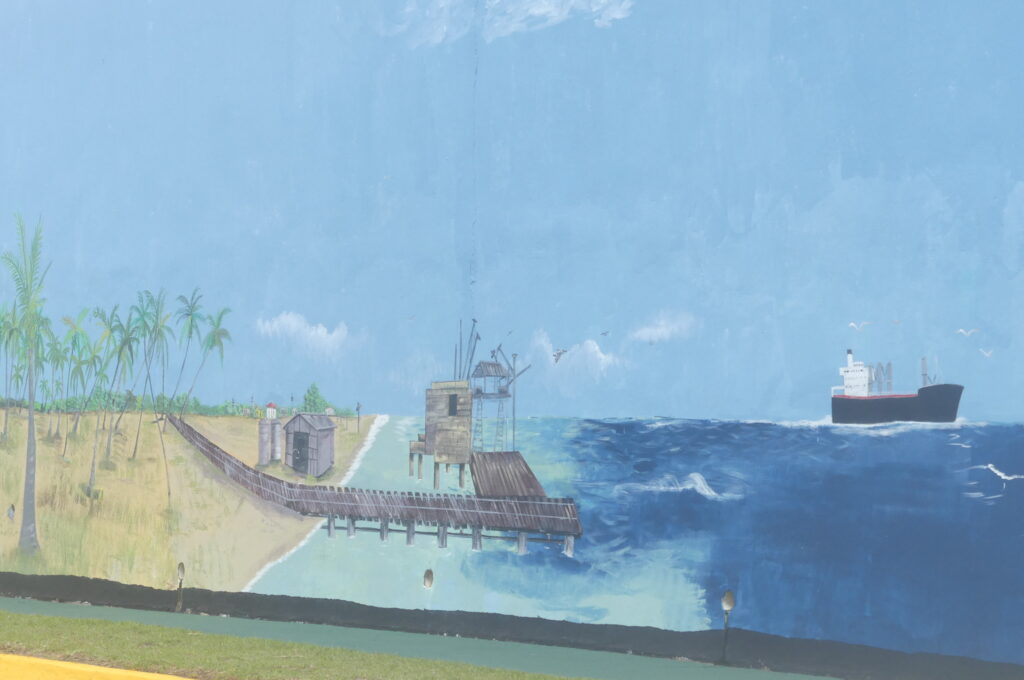
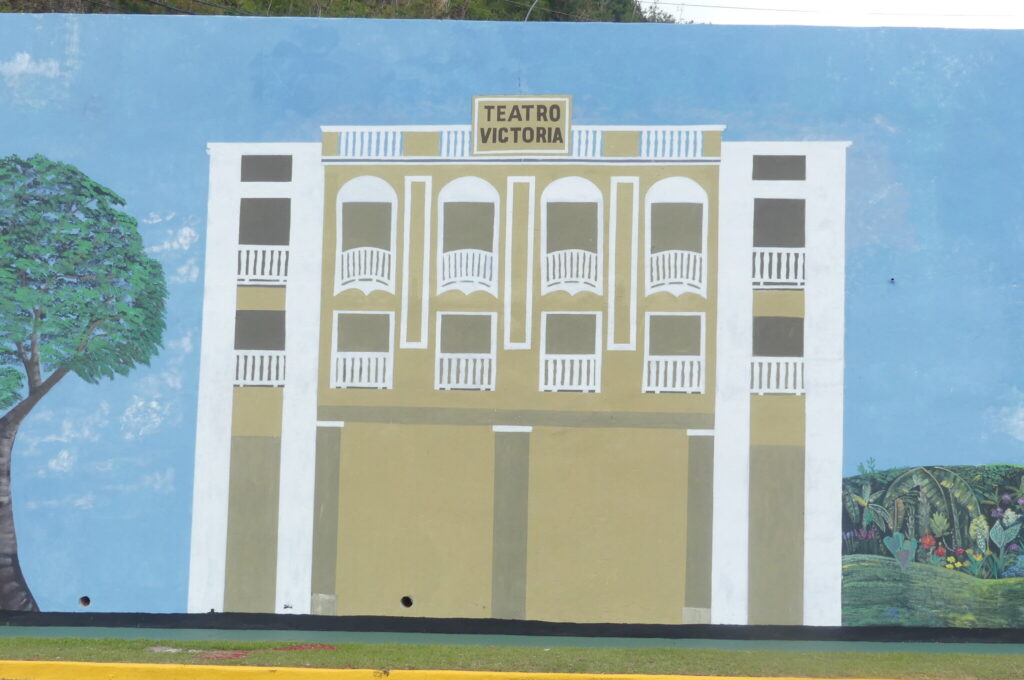
(10 de marzo de 2020 – WALO Radio) – “Siempre estoy disponible para mi pueblo. Mi pueblo es mi pueblo”, expresó el humacaeño Wilfredo Molina Peña ante la denominación en el mural que ilustra diferentes estampas de edificios históricos del municipio de Humacao.
El sábado, 7 de marzo, el ayuntamiento de la Ciudad Gris inauguró el nuevo mural en la entrada de la comunidad de Junquito, carretera PR-3 del barrio Río Abajo. Este proyecto pictórico se le dedicó Molina Peña, reconociendo sus esfuerzos y trabajos como ciudadano humacaeño. Molina ha cooperado con desde el 1957, haciendo diferentes labores civiles como las construcciones de residencias en un proyecto gubernamental y, actualmente, el centro recreativo de este sector.
Durante la actividad participaron: el alcalde de Humacao, Luis Raúl Sánchez; la directora de arte y cultura, Flor de los Santos, y Gloria Vellón como invitada especial. Todos exaltaron la labor de Molina, quien en el 1996 le solicitó al ingeniero y director del proyecto de la comunidad de Junquito, Carlos Díaz, le concediera la pared para un mural a gran escala.
Molina explicó durante el evento que su propósito era evitar que se establecieran anuncios comerciales en el lugar y, sobre todo, aportar a la belleza del pueblo al que él ama. Cuando le surgió la idea de un mural, contrató a la empresa local Rótulos Serrano. Gran parte de la inversión fue aportada personalmente por el homenajeado y, en otras ocasiones, con la ayuda de los jefes del ayuntamiento, según relató a WALO Radio.
How 1DollarDepositCasinos Explains Low-Deposit Gambling Trends in New Zealand
New Zealand’s online gambling landscape has shifted considerably over the past decade, and one of the most telling indicators of that shift is the growing popularity of low-deposit casino options among Kiwi players. Where once the standard entry point for online casino play required deposits of NZ$20 or more, a distinct segment of the market has emerged around the NZ$1 deposit threshold — a figure that would have seemed commercially impractical to operators just a few years ago. Understanding why this trend has taken hold requires looking at the regulatory environment, the psychology of the modern player, the economics of payment processing, and the role that specialist information platforms have played in shaping consumer awareness. The convergence of these factors tells a broader story about how digital gambling is evolving in a market that sits in a genuinely unusual legal position globally.
New Zealand’s Regulatory Context and Why It Encourages Offshore Operators
New Zealand operates under the Gambling Act 2003, a piece of legislation that was drafted before smartphones existed and before online casino gaming became a mainstream leisure activity. The Act effectively prohibits domestically-based online casinos from offering real-money games to New Zealand residents, but it contains no provision that criminalises players for accessing offshore-licensed platforms. This creates a legal grey zone that has been deliberately left unaddressed by successive governments, partly because of the complexity of enforcement and partly because the tax revenue question is politically inconvenient — money spent at offshore casinos does not generate GST or corporate tax for the New Zealand government.
The practical consequence is that the New Zealand online casino market is served almost entirely by operators licensed in jurisdictions such as Malta (under the Malta Gaming Authority), Gibraltar, Curaçao, and, increasingly, the Isle of Man. These operators are not regulated by the Department of Internal Affairs, which oversees domestic gambling in New Zealand, and they are not bound by the Responsible Gambling Trust’s local guidelines in the same way that land-based venues are. This regulatory gap has two effects relevant to low-deposit gambling. First, it means that offshore operators compete aggressively for New Zealand players without the compliance overhead that a domestic licensing regime would impose. Second, it means that players have no domestic regulatory body they can appeal to if a dispute arises, which in turn increases the importance of independent information sources that help players evaluate operators before committing funds.
The Gambling (Harm Prevention and Minimisation) Amendment Act discussions that have periodically surfaced in the New Zealand parliament since around 2018 have not yet produced a comprehensive reform of the online casino framework. A 2020 review by the Department of Internal Affairs acknowledged that the existing law was inadequate for the digital environment but stopped short of recommending the creation of a domestic online casino licensing regime. This legislative stasis has, paradoxically, allowed the low-deposit casino market to develop organically, because operators face no minimum deposit requirements imposed by a local regulator.
The Economics Behind the NZ$1 Deposit Model
At first glance, accepting a NZ$1 deposit seems economically irrational for a casino operator. Processing fees alone can consume a meaningful portion of very small transactions, particularly for credit card payments where interchange fees are typically calculated as a percentage plus a fixed per-transaction charge. A NZ$1 deposit processed via Visa or Mastercard might cost the operator more in fees than the deposit itself is worth. So why have a growing number of operators introduced this threshold, and why has it found a receptive audience in New Zealand specifically?
The answer lies partly in payment method diversification. The widespread adoption of e-wallets — particularly POLi, which was designed specifically for the New Zealand and Australian markets, as well as Skrill, Neteller, and more recently cryptocurrency options — has dramatically reduced per-transaction costs for small deposits. POLi, which facilitates direct bank transfers without a card intermediary, has near-zero transaction fees for amounts under NZ$10. This means the NZ$1 deposit becomes financially viable when routed through the right payment infrastructure. Operators who have invested in integrating these payment methods can offer low minimum deposits without absorbing unsustainable losses on processing costs.
There is also a customer acquisition logic at work. The NZ$1 deposit functions as a low-friction entry point that allows a player to access a bonus offer — typically a match bonus or a set of free spins — without meaningful financial risk. From the operator’s perspective, the cost of acquiring a player who deposits NZ$1 is minimal, but the lifetime value of that player, if they convert to regular depositing, can be substantial. Data from European markets, where low-deposit casinos have been tracked by researchers at the Finnish Institute for Health and Welfare and similar bodies, suggests that players who begin with micro-deposits and have a positive initial experience show conversion rates to higher deposit amounts that are comparable to players who begin with standard deposits. The NZ$1 deposit is, in effect, a trial mechanism — a way of reducing the psychological and financial barrier to first engagement.
New Zealand’s relatively high average disposable income and strong digital infrastructure make it an attractive market for this model. Broadband penetration in New Zealand exceeded 88% of households as of the 2023 figures published by the Commerce Commission, and smartphone ownership among adults sits above 90%. These conditions mean that the technical barriers to online casino play are low, and the primary remaining barrier is financial hesitation — which the NZ$1 deposit model is specifically designed to address.
How Specialist Information Platforms Are Shaping Player Behaviour
The growth of low-deposit gambling in New Zealand has not occurred in an information vacuum. A significant part of the story involves the emergence of specialist review and comparison platforms that focus specifically on this segment of the market. These platforms perform a function that is genuinely useful to consumers: they evaluate offshore operators on criteria that matter for the NZ$1 deposit use case specifically, including which payment methods qualify for the minimum deposit, whether the associated bonus offer is actually accessible at that deposit level, what the wagering requirements attached to the bonus are, and whether the operator has a documented history of prompt withdrawals for New Zealand players.
1DollarDepositCasinos is one such platform that has developed a focused methodology for evaluating operators against these specific criteria. The platform’s approach reflects a broader trend in gambling information publishing, where generic casino review sites — which proliferated in the early 2010s and often produced undifferentiated content optimised primarily for search engines rather than reader utility — are being supplemented or replaced by niche platforms with more defensible editorial positions. Players researching low-deposit options in New Zealand increasingly encounter this site as a reference point precisely because its scope is narrow enough to be genuinely useful rather than attempting to cover every possible gambling topic.
The information architecture of these specialist platforms matters for player behaviour in ways that are not immediately obvious. When a player can verify, before depositing, that a NZ$1 deposit will actually unlock the advertised bonus at a specific operator, that player is less likely to experience the frustration of discovering that the minimum deposit for the bonus is NZ$10 or NZ$20 — a discrepancy that is common in the industry and that erodes trust in both the operator and the information source. By providing verified, operator-specific information about deposit thresholds and bonus eligibility, specialist platforms reduce information asymmetry between players and operators. This has a measurable effect on player satisfaction and, by extension, on the sustainability of the low-deposit segment as a whole.
It is worth noting that the quality of information in this space varies considerably. Some platforms that nominally cover low-deposit casinos in New Zealand are essentially affiliate marketing operations that prioritise commission rates over editorial accuracy. The distinction between genuinely independent review platforms and commission-driven directories is not always apparent to casual readers, which is why the methodology a platform uses to evaluate operators — and whether that methodology is transparently disclosed — has become an increasingly important quality signal for sophisticated players.
Player Psychology, Responsible Gambling, and the Structural Appeal of Small Deposits
The psychological dimensions of low-deposit gambling deserve careful examination, because they cut in two directions simultaneously. On one hand, the NZ$1 deposit model has genuine responsible gambling credentials: it allows players to experience real-money gambling without exposing themselves to significant financial loss, it sets a precedent for controlled spending, and it is accessible to players who might otherwise be excluded from the online casino market by higher minimum deposit requirements. The Problem Gambling Foundation of New Zealand has historically noted that financial accessibility is a double-edged factor in gambling harm — it can democratise participation in a way that is broadly benign, or it can lower the barriers to problematic behaviour depending on the individual and the context.
Research published in the Journal of Gambling Studies has consistently found that the relationship between deposit size and gambling harm is not linear. High-frequency small-deposit gambling can produce harm profiles that resemble those associated with larger-stake gambling, particularly when the small deposit is accompanied by aggressive bonus structures that incentivise rapid reinvestment of winnings. The NZ$1 deposit model, when it functions as a genuine entry point rather than as a mechanism for encouraging players to rapidly escalate their deposits through matched bonuses, appears to be associated with lower harm rates. However, when the NZ$1 deposit is the first step in a funnel designed to push players toward NZ$20, NZ$50, or NZ$100 deposits through escalating bonus offers, the harm profile changes significantly.
This distinction is important for understanding why not all NZ$1 deposit casinos are equivalent from a consumer welfare perspective. The structure of the bonus ecosystem around the initial deposit matters as much as the deposit threshold itself. Operators that offer a standalone bonus for the NZ$1 deposit — a fixed number of free spins, for example, with no pressure to deposit further — create a genuinely low-risk experience. Operators that use the NZ$1 deposit as the entry point to a multi-tier loyalty programme with escalating deposit requirements at each tier are using the low-deposit threshold as an acquisition mechanism rather than a player welfare feature.
New Zealand players navigating this distinction benefit from the kind of granular operator-by-operator analysis that specialist platforms provide. Understanding the full bonus structure, not just the headline minimum deposit figure, is essential for making an informed decision. The growing sophistication of New Zealand players in this regard — evidenced by the increasing specificity of search queries around low-deposit gambling, which have shifted from generic terms like “online casino NZ” toward more specific queries about deposit thresholds, wagering requirements, and payment method eligibility — suggests that the information environment is maturing alongside the market itself.
The trend toward low-deposit gambling in New Zealand is also connected to broader shifts in how younger adults engage with discretionary spending. The cohort of players who came of age during the post-2008 economic environment, and who subsequently navigated the economic disruptions of 2020 and beyond, has a demonstrably different relationship with financial risk than earlier generations. Micro-transaction models — familiar from mobile gaming, streaming services, and subscription commerce — have normalised the idea of paying small amounts for access to experiences. The NZ$1 deposit casino model fits naturally into this consumption pattern, and operators who recognised this early have captured a disproportionate share of the under-35 New Zealand player market.
The trajectory of low-deposit gambling in New Zealand over the next several years will depend on a combination of regulatory developments, payment infrastructure evolution, and the continued maturation of the information ecosystem around the sector. If the New Zealand government eventually moves to create a domestic online casino licensing framework — as has been proposed in various forms since at least 2016 — minimum deposit requirements could become a regulated parameter, which would either formalise the NZ$1 threshold or eliminate it depending on how the regulation is drafted. In the absence of such regulation, the market will continue to be shaped by competitive dynamics among offshore operators and by the growing influence of specialist information platforms that help players navigate an increasingly complex landscape.
What the emergence of platforms like 1DollarDepositCasinos ultimately illustrates is that consumer demand for transparent, specific, and actionable information about gambling options is not being adequately met by either operators or regulators in the New Zealand context. The gap between what players need to know and what they are officially told has created space for independent information publishing to play a genuinely important role. Whether that role will be formalised through industry codes or regulatory requirements — as has happened in the United Kingdom, where the Gambling Commission has imposed specific standards on affiliate and information publishers since 2018 — remains to be seen. For now, the low-deposit casino segment in New Zealand continues to grow, shaped by the interplay of legal ambiguity, economic pragmatism, technological change, and an information environment that is, slowly and imperfectly, becoming more useful to the players it serves.
Humilde y agradecido, Molina recibió la dedicación y en sus palabras expresó que “no me lo esperaba. Siempre que he trabajado, lo he hecho sin ningún interés de aparecer. Mi nombre es nada”.
“Yo considero que cada ciudadano debe de aportar para el beneficio de la comunidad donde esté establecido. Hay muchas maneras de hacerlo, no solamente por la parte económica. También hacerlo con una cooperación física, con ideas”, exhortó.
Durante la inauguración, el alcalde Sánchez anunció que el municipio va a reparar la cascada Loma del tamarindo, localizado sobre el mural, para que funcione conjunto con esta pintura.
Por otro lado, Molina informó que espera que el ayuntamiento le ayude a cubrir los gastos de reparación de la superficie de la pista atlética, que se afectó por el huracán María en el 2017.
La Banda Municipal de Humacao y las abanderadas amenizaron esta actividad, organizada por el grupo Pedaleo por mi Salud, Inc., con varias piezas musicales.
Fotogalería: Nuevo mural en la comunidad Junquito de Humacao