Foto: Cyber News
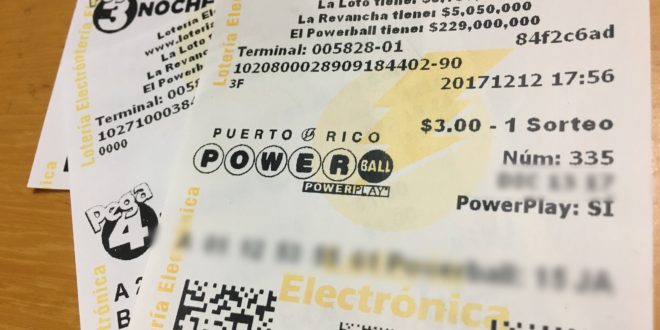
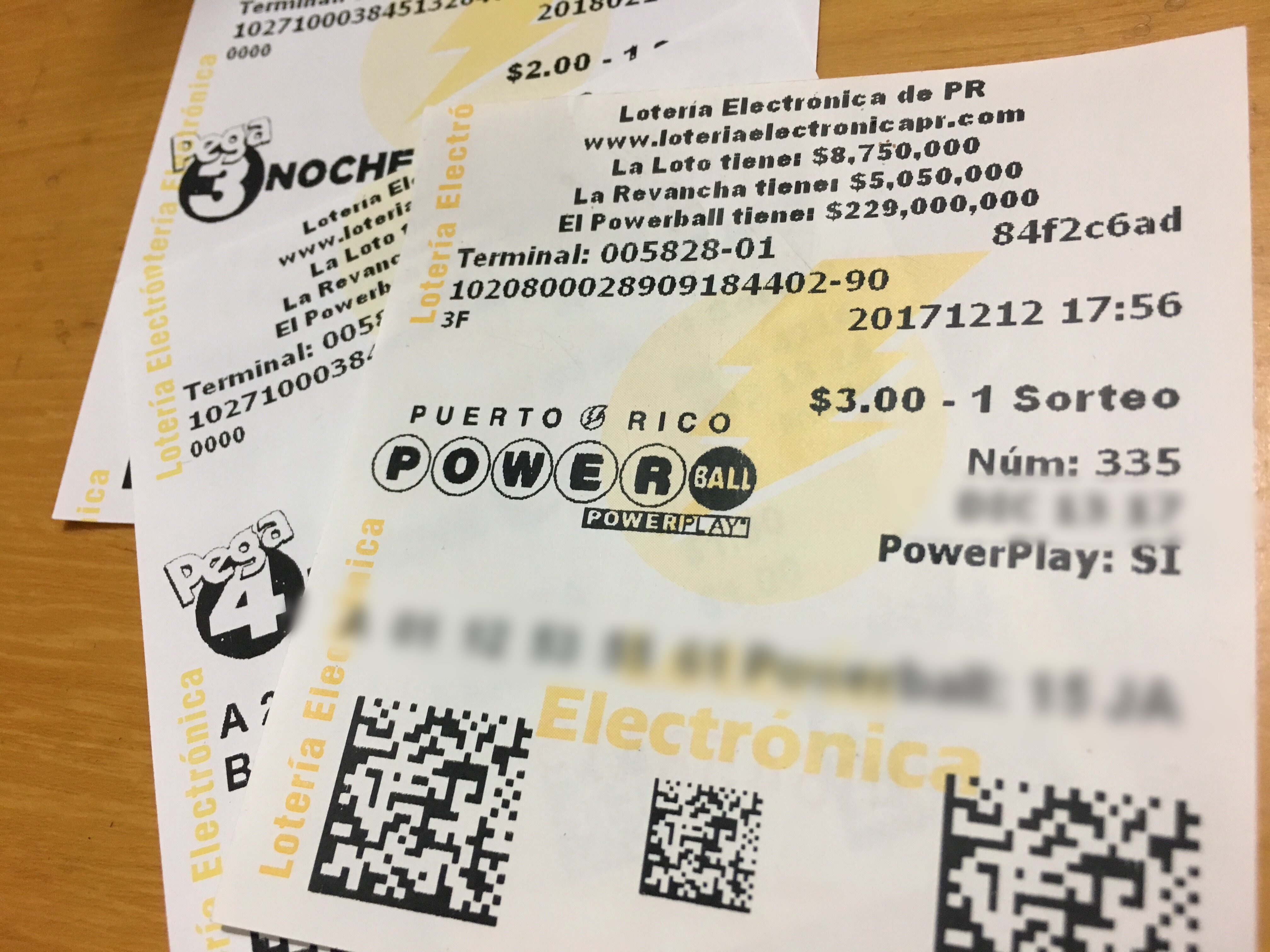
(7 de junio de 2018) – Los números ganadores en los sorteos de la Lotería Electrónica del miércoles, 6 de junio fueron los siguientes:
Sorteo Diurno
Pega 2 —————- 90
Pega 3 —————- 557
Pega 4 —————- 1217
Sorteo Nocturno
Pega 2 —————- 13
Pega 3 —————- 567
Pega 4 —————- 8604
Loto ——————- 10-11-20-23-39-13
Multiplicador —— 4
Revancha ———– 11-23-28-33-25-14
Powerball ———– 23-28-41-53-56-14
How LegitCasinos Evaluates Online Casino Licensing Standards in Australia
Australia’s online gambling market occupies an unusual regulatory position. Despite being one of the most active gambling populations in the world — with Australians historically losing more per capita than almost any other nationality — the country’s federal framework under the Interactive Gambling Act 2001 (IGA) prohibits licensed offshore operators from actively offering real-money casino games to Australian residents. Yet millions of Australians continue to access offshore platforms, and the question of which licensing jurisdictions actually provide meaningful consumer protections remains critically important. Evaluating these licensing standards is not a simple matter of checking whether a casino holds a license — it requires understanding the substantive differences between regulatory frameworks, how enforcement actually operates, and what a license genuinely means for a player’s safety and recourse options. This is the work that serious casino evaluation platforms undertake, and understanding how that evaluation process functions helps players make more informed decisions in a market where regulatory clarity is scarce.
The Australian Regulatory Context and Why Offshore Licensing Matters
The Interactive Gambling Act 2001 remains the cornerstone of Australia’s federal gambling legislation. Its 2017 amendments, introduced through the Interactive Gambling Amendment Act 2017, strengthened enforcement mechanisms and explicitly prohibited unlicensed offshore operators from providing services to Australians. The Australian Communications and Media Authority (ACMA) was granted expanded powers to issue infringement notices and pursue site-blocking orders against non-compliant operators. Between 2019 and 2023, ACMA successfully blocked hundreds of illegal gambling websites and issued multiple formal warnings. However, the legislation creates a structural gap: it does not establish a domestic licensing regime for online casino games. Poker, casino table games, and slots remain unlicensed at the federal level for online delivery, which means any operator offering these products to Australians is technically doing so from an offshore jurisdiction.
This gap is what makes the quality of offshore licensing so consequential. When an Australian player deposits funds into an online casino, the regulatory protections available to them are entirely determined by the licensing jurisdiction of that operator — not by Australian law. If a dispute arises, if funds are withheld, or if a platform closes unexpectedly, the player’s recourse depends on whether the licensing authority has genuine enforcement capacity, accessible complaints procedures, and a track record of acting against licensees that breach player protection obligations. Jurisdictions vary enormously on all three dimensions, and a license number displayed in a website footer communicates almost nothing about these substantive qualities without further investigation.
The major licensing jurisdictions relevant to the Australian market include Malta (through the Malta Gaming Authority, or MGA), Gibraltar, the Isle of Man, Curaçao, and increasingly Kahnawake in Canada. The MGA, established under Malta’s Gaming Act of 2018 which replaced the earlier 2004 framework, is widely regarded as one of the more rigorous regulators. It requires operators to maintain segregated player funds, submit to regular audits, participate in a formal dispute resolution process, and meet detailed technical standards for game fairness. Gibraltar’s Gambling Commissioner operates under the Gambling Act 2005 and imposes similarly demanding requirements, with a particular focus on anti-money laundering compliance. Curaçao, by contrast, operates under a master license system that has historically allowed sub-licensees to operate with minimal oversight — a situation the Curaçao government began formally restructuring in 2023 with the introduction of new gaming legislation intended to impose more direct accountability on individual operators.
How Licensing Quality Is Assessed in Practice
Assessing licensing quality requires going beyond the identity of the issuing authority to examine how that authority actually functions. A regulator’s published standards may be rigorous, but if enforcement is inconsistent or complaints procedures are inaccessible, the practical value of that license to a player is limited. Evaluation frameworks that take this seriously typically examine several interconnected factors: the financial requirements imposed on licensees, the dispute resolution mechanisms available to players, the auditing and certification standards for game software, and the regulator’s public enforcement record.
Financial requirements are a foundational indicator. The MGA, for example, requires operators to hold a minimum share capital and to demonstrate ongoing financial stability through quarterly reporting. More importantly, it mandates that player funds be kept separate from operational funds, which protects deposits in the event of insolvency. The Isle of Man Gambling Supervision Commission has similar requirements and publishes detailed guidance on acceptable fund protection methods, ranging from insurance arrangements to trust accounts. In contrast, some Curaçao sub-licensees have historically operated without any formal segregation requirement, meaning player balances were effectively unsecured liabilities on the operator’s general balance sheet — a significant risk that is invisible to most players.
Dispute resolution is equally important. The MGA operates a formal Player Support Unit and, since 2018, has required all licensees to participate in approved Alternative Dispute Resolution (ADR) schemes. Players who cannot resolve a complaint directly with an operator can escalate to an ADR provider, and ultimately to the MGA itself, which has the authority to compel operators to pay verified claims. The Gibraltar Regulatory Authority similarly maintains a formal complaints process. These mechanisms have genuine teeth: the MGA has publicly revoked licenses and imposed six-figure fines on operators that failed to meet their obligations. Detailed reviews of individual platforms evaluated on LegitCasinos reflect these distinctions, noting not just which license an operator holds but what that license’s complaints infrastructure actually looks like in practice.
Game certification standards are another layer of assessment. Reputable licensing jurisdictions require that all games offered by licensees be certified by accredited testing laboratories. The most widely recognized of these are eCOGRA (based in the UK), BMM Testlabs, Gaming Laboratories International (GLI), and iTech Labs. These organizations test random number generators (RNGs) for statistical fairness, verify that published return-to-player (RTP) percentages are accurate, and assess game software for vulnerabilities. An MGA or Isle of Man license effectively requires this third-party certification as a condition of approval. Some less rigorous jurisdictions accept self-certification or internal auditing, which offers far weaker assurance to players. When evaluating a casino’s licensing status, checking which testing laboratory has certified its games — and whether that laboratory is itself accredited by recognized bodies such as UKAS or ANAB — provides meaningful additional information beyond the license itself.
Specific Evaluation Criteria Applied to the Australian Market
Evaluating licensing standards for the Australian market involves some considerations that are specific to the local context. Because Australian law does not provide a domestic licensing pathway for online casino games, evaluators must account for the fact that all compliant operators are offshore entities, and that the relationship between Australian consumer protection law and offshore licensing frameworks is not straightforward. The Australian Consumer Law (ACL) theoretically applies to transactions with Australian consumers, but enforcing it against an offshore operator licensed in Malta or Curaçao is practically difficult. This makes the quality of the offshore license more important, not less, because it may be the only meaningful regulatory protection available.
Responsible gambling provisions are a specific area where licensing standards diverge significantly and where the Australian context adds additional weight. Australia has documented rates of problem gambling that are among the highest in the developed world. The Australian Institute of Health and Welfare estimated in 2021 that approximately 0.5% of Australian adults met criteria for problem gambling, with a further 1.4% classified as moderate-risk gamblers. Given this context, the responsible gambling tools mandated by a licensing jurisdiction — deposit limits, self-exclusion mechanisms, session time limits, and reality checks — are not peripheral features but core consumer protections. The MGA’s 2019 Responsible Gaming Framework introduced mandatory deposit limit prompts for new players and required operators to monitor and intervene in cases of problem gambling indicators. The UK Gambling Commission, while not directly relevant to Australian-facing operators, has driven similar standards that many operators apply globally as a baseline. Jurisdictions that do not mandate these tools, or that allow operators to disable them at the player’s request without cooling-off periods, provide materially weaker protection.
Payment security and anti-money laundering (AML) compliance are also evaluated as part of licensing quality. Reputable licensing jurisdictions require operators to implement Know Your Customer (KYC) procedures before processing significant withdrawals, verify the source of funds for large deposits, and report suspicious transactions to financial intelligence units. The MGA’s AML framework aligns with the Financial Action Task Force (FATF) recommendations and requires designated compliance officers within each licensed entity. These requirements serve dual purposes: they protect the integrity of the financial system and they protect players from platforms that might otherwise process fraudulent transactions or operate without adequate identity verification. For Australian players, robust KYC processes also provide some assurance that an operator is operating as a legitimate business rather than as a vehicle for fraud.
Technical standards for platform security round out the assessment framework. Licensing jurisdictions that take cybersecurity seriously require operators to implement SSL encryption across all data transmissions, maintain secure storage for player data in compliance with applicable data protection laws, and undergo penetration testing of their platforms. The MGA’s technical standards, updated in 2021, include specific requirements for cybersecurity incident reporting and response. The Isle of Man’s framework similarly mandates data security audits. These requirements are directly relevant to Australian players, whose personal and financial data is held by offshore entities outside the direct reach of Australian privacy law.
How Evaluation Platforms Synthesize Licensing Information for Australian Players
The challenge for any evaluation platform is translating the technical complexity of licensing frameworks into information that is actionable for ordinary players. A player deciding whether to deposit at a particular casino is not in a position to read the MGA’s regulatory framework documents or cross-reference a Curaçao sub-license against the master license holder’s compliance history. The value of a rigorous evaluation platform lies in doing this work systematically and presenting conclusions in a form that players can use.
Effective evaluation methodologies typically involve several stages. The first is verification: confirming that a claimed license is genuine by checking directly with the issuing authority’s public license register. The MGA, Isle of Man, Gibraltar, and UK Gambling Commission all maintain searchable public registers. Curaçao’s licensing structure has historically been less transparent, though the 2023 regulatory reform introduced a public register requirement. Fake or expired license claims are not uncommon in the offshore casino market, and direct verification is the only reliable check.
The second stage is jurisdictional assessment: evaluating the regulatory framework of the issuing jurisdiction against the criteria described above — financial requirements, dispute resolution, game certification, responsible gambling provisions, and AML compliance. This produces a qualitative assessment of what the license actually represents in terms of player protection, rather than simply recording that a license exists.
The third stage involves operator-specific research: examining the operator’s compliance history, including any public enforcement actions, fines, or license conditions imposed by the regulator. The MGA publishes enforcement decisions on its website, and these records reveal patterns of non-compliance that are not visible from a license number alone. An operator that has received multiple warnings for slow payment processing or inadequate responsible gambling tools presents a different risk profile than one with a clean enforcement record, even if both hold the same class of license.
The fourth stage is ongoing monitoring. Licensing status is not static — licenses can be suspended, conditions can be added, and operators can change ownership in ways that affect their compliance posture. Evaluation platforms that update their assessments regularly provide more reliable information than those that conduct one-time reviews. For Australian players in particular, the dynamic nature of ACMA’s enforcement activity means that an operator’s legal status in the Australian market can change, and current information is essential.
Understanding how this evaluation process works — and what it actually examines — allows Australian players to engage more critically with casino review information rather than treating license badges as binary quality signals. A license from a recognized jurisdiction is a necessary but not sufficient condition for a trustworthy platform. The specific requirements of that jurisdiction, the operator’s compliance history within it, and the practical accessibility of its dispute resolution mechanisms all determine whether that license provides meaningful protection. In a market where domestic regulation does not cover the products most players are seeking, this kind of detailed, criteria-based licensing assessment is the closest available substitute for a robust local regulatory framework — and it is the standard that serious evaluation work in this space should be held to.
Powerplay ———- 3X
Recuerde verificar estos números directamente con la Lotería Electrónica o sus suplidores.