
(29-agosto-2022) La Policía reportó una apropiación ilegal alrededor de las 7:30 a.m. hoy, lunes, en la calle Sagitario de la urbanización Brisas De Loíza en Canóvanas.
How No Deposit Bonuses Work in New Zealand According to NoCasinosDeposit
No deposit bonuses occupy a specific and well-defined niche within the online casino industry, and New Zealand players have become increasingly familiar with how these offers function over the past decade. At their core, no deposit bonuses allow a player to receive a small amount of bonus credit, free spins, or bonus cash simply by registering an account with a casino operator — without needing to fund that account first. The concept sounds straightforward, but the mechanics behind these offers involve a layered set of conditions, regulatory considerations, and practical limitations that shape how much value a player can realistically extract from them. Understanding those mechanics in detail is what separates informed players from those who walk away frustrated after discovering their winnings cannot be withdrawn.
The Structure of No Deposit Bonus Offers in New Zealand
No deposit bonuses in New Zealand typically arrive in one of three formats: a fixed cash credit applied to the account upon registration, a set number of free spins allocated to one or more specific slot titles, or a time-limited free play amount where the player can wager freely for a defined period and keep whatever balance remains up to a certain cap. Each format carries its own risk profile and expected value, and they are not interchangeable from the operator’s perspective.
Fixed cash credits — often ranging between NZ$5 and NZ$30 — are deposited directly into the bonus balance and can be used across a broader range of games than free spins. However, they almost always come attached to wagering requirements, which represent the number of times the bonus amount must be turned over in real bets before any resulting winnings can be converted to withdrawable cash. A NZ$10 bonus with a 40x wagering requirement means the player must place NZ$400 in total bets before a withdrawal becomes eligible. Given that most slot games contribute 100% toward wagering requirements while table games like blackjack or roulette often contribute as little as 10% or nothing at all, the path to clearing these requirements is rarely as simple as it appears on the surface.
Free spins no deposit offers are more constrained in scope. The spins are typically locked to a single game or a small selection of games chosen by the casino, and the winnings generated from those spins are credited as bonus funds subject to their own wagering requirements. In New Zealand, it is common to see free spin values set at NZ$0.10 per spin, so 50 free spins translates to a maximum NZ$5 in spin value. If the wagering requirement on those winnings is 35x, the player must wager NZ$175 before cashing out. The maximum withdrawal cap on no deposit bonus winnings is another critical variable — many operators set this at NZ$50 to NZ$100 regardless of how much the player actually wins, which effectively places a ceiling on the upside.
Time-limited free play bonuses, sometimes called free play or free chip offers, give the player a larger nominal amount — occasionally NZ$500 or more — to wager within a short window, often 60 minutes. Whatever balance remains at the end of the session is converted to real money, usually up to a specified cap and subject to wagering requirements before withdrawal. These offers create a sense of high-stakes play but are engineered so that the house edge will erode most of the free play balance over the time period, with the conversion cap ensuring that exceptional runs are still bounded by operator-set limits.
Regulatory Context and the Role of Offshore Licensing
New Zealand’s gambling regulatory environment is distinctive compared to most other English-speaking markets. The Gambling Act 2003 governs land-based gambling and prohibits New Zealand-based companies from operating online casino games for New Zealand residents. However, the legislation does not explicitly prohibit New Zealand residents from accessing and playing at offshore-licensed casinos, which has created a legal grey area that has persisted for over two decades. As a result, the online casino market accessible to New Zealand players is dominated by operators licensed in jurisdictions such as Malta (under the Malta Gaming Authority), Gibraltar, Curaçao, and the Isle of Man.
This regulatory structure has direct implications for no deposit bonuses. Because no New Zealand-based regulatory body oversees the bonus terms and conditions offered by these offshore operators, there is no standardised requirement for how wagering requirements must be disclosed, what the maximum withdrawal cap must be, or how long bonus funds remain valid. A casino licensed under the Malta Gaming Authority is subject to MGA bonus advertising standards, which since 2018 have required clearer disclosure of key terms in promotional materials, but a Curaçao-licensed operator faces far less prescriptive requirements in this area.
Players researching no deposit offers in New Zealand are therefore navigating a landscape where the quality and transparency of bonus terms varies significantly depending on which licensing authority oversees the operator in question. Resources that aggregate and analyse these offers play a meaningful role in helping players distinguish between operators with fair terms and those whose conditions make it practically impossible to withdraw any winnings. To understand how specific offers are evaluated and categorised, players can visit NoCasinosDeposit, where the bonus terms from multiple operators are broken down according to wagering requirements, withdrawal caps, game restrictions, and expiry periods — the four variables that most directly determine a bonus’s practical value.
The absence of a domestic licensing framework also means that responsible gambling protections attached to no deposit bonuses are not uniformly enforced. Reputable offshore operators serving New Zealand players voluntarily implement self-exclusion tools, deposit limits, and reality-check notifications, but these are not mandated by any New Zealand authority. The Department of Internal Affairs, which administers the Gambling Act, has periodically raised the question of whether the legislative framework needs updating to address the growth of offshore online gambling, but as of 2024 no substantive legislative reform has been enacted to bring offshore operators under direct New Zealand regulatory oversight.
How Wagering Requirements and Withdrawal Caps Shape Real Value
The gap between the nominal value of a no deposit bonus and its actual expected value is one of the most consistently misunderstood aspects of these offers. A mathematically rigorous approach to evaluating a no deposit bonus requires understanding the house edge of the permitted games, the wagering requirement multiplier, and the maximum withdrawal cap in combination — not in isolation.
Consider a NZ$20 no deposit bonus with a 30x wagering requirement, a maximum withdrawal of NZ$100, and a restriction to slot games with an average return-to-player (RTP) rate of 96%. The player must wager NZ$600 in total. At a 4% house edge (which is the inverse of the 96% RTP), the expected loss over NZ$600 in wagering is NZ$24. Since the player starts with NZ$20 in bonus funds, the expected balance at the end of the wagering requirement is approximately NZ$20 minus NZ$24, which is negative. This means that on average, the player will exhaust the bonus before clearing the wagering requirement. The bonus has a negative expected value for the average player, even before considering the maximum withdrawal cap.
However, expected value calculations describe averages across a large population of players. Variance — the statistical spread of outcomes — means that a meaningful proportion of players will run above expectation and clear the wagering requirement with a positive balance. For those players, the maximum withdrawal cap then determines how much of that positive outcome they can actually access. This is why bonuses with lower wagering requirements and higher withdrawal caps are categorically more valuable, even when the nominal bonus amount is identical.
NoCasinosDeposit and similar bonus aggregation platforms have contributed to a growing awareness among New Zealand players of these mechanics. As players have become more sophisticated in evaluating offers, some operators have responded by reducing wagering requirements — offers in the 20x to 25x range have become more common since approximately 2020 — while others have tightened withdrawal caps or introduced game restrictions that effectively reduce the RTP of permitted games. The net effect on player value has been mixed, and careful evaluation of the complete set of terms remains essential.
Game restrictions deserve particular attention because they interact with RTP in ways that are not always immediately obvious. A no deposit bonus restricted to a specific slot title may be directed toward a game with a published RTP of 94% or lower, rather than the 96% industry average. Some operators restrict bonuses to proprietary games where the RTP is not publicly disclosed. In these cases, the player is unable to accurately calculate expected value, which places them at an informational disadvantage. Checking whether the permitted games are from established software providers with publicly audited RTP figures — companies like NetEnt, Microgaming, Play’n GO, or Pragmatic Play — is a useful proxy for assessing the fairness of the terms.
Practical Steps for Evaluating and Claiming No Deposit Bonuses
For New Zealand players approaching no deposit bonuses with the goal of making informed decisions rather than being drawn in by headline figures, a consistent evaluation process is more useful than any single piece of advice. The process begins before registration, at the point of reading the full terms and conditions document — not the promotional summary, which is designed to highlight the attractive elements while minimising the visibility of restrictive conditions.
The first variable to identify is the wagering requirement multiplier and whether it applies to the bonus amount alone or to the bonus amount plus any deposit made. In a no deposit context, no deposit is required, so this distinction matters less — but some operators apply the wagering requirement to winnings generated from the bonus rather than to the bonus itself, which can result in a significantly higher effective requirement depending on how much the player wins during play.
The second variable is the list of eligible games and their contribution percentages toward the wagering requirement. A bonus that nominally permits play across all casino games but assigns 0% contribution to blackjack, baccarat, roulette, video poker, and live dealer games is, in practice, a slots-only bonus. This matters because slot games carry higher variance than most table games, meaning the player’s balance will fluctuate more dramatically during the wagering process, increasing the probability of bust-out before the requirement is cleared.
The third variable is the time limit within which the wagering requirement must be completed. Limits of 7 days are common, but some operators impose 3-day or even 24-hour windows on no deposit bonuses specifically, reasoning that these offers attract players who are testing the platform rather than committing to it. A short time window combined with a high wagering requirement creates a situation where the player must bet at a pace that may not align with their normal play style, which can lead to larger individual bets and faster depletion of the bonus balance.
The fourth variable is the maximum withdrawal amount. As noted earlier, this cap defines the upper boundary of what can be won from the bonus regardless of actual performance. Some operators set this cap as a multiple of the bonus — for example, five times the bonus amount — while others set a fixed monetary cap. A fixed cap of NZ$50 on a NZ$10 bonus is less restrictive than it might appear, since clearing the wagering requirement with a positive balance is already a below-average outcome for the player. But a cap of NZ$50 on a NZ$20 bonus with a 15x wagering requirement is genuinely restrictive, since the lower wagering requirement makes clearing it more achievable and the cap then becomes the binding constraint on the player’s upside.
Beyond these four core variables, players should also verify the operator’s verification requirements before claiming a no deposit bonus. Most operators require identity verification — typically a government-issued photo ID and proof of address — before processing any withdrawal, including withdrawals of winnings derived from no deposit bonuses. Some operators require this verification before the bonus can even be activated, while others allow play to begin immediately but require verification before withdrawal. In either case, failure to complete verification will result in the inability to withdraw, so understanding the process in advance avoids wasted effort.
Payment method restrictions on withdrawals are another practical consideration. Some operators limit the withdrawal methods available to players who have not made a deposit, or who have only used a no deposit bonus. In these cases, the player may find that their only withdrawal option is a bank transfer with a minimum withdrawal amount of NZ$50 or more, which creates a barrier if their cleared bonus balance falls below that threshold. Knowing this in advance allows the player to decide whether the offer is worth pursuing given the practical constraints on accessing any winnings.
New Zealand players who approach no deposit bonuses with a clear-eyed understanding of these mechanics are in a fundamentally different position from those who respond to promotional headlines without reading the underlying terms. The offers themselves are not inherently deceptive — they serve a legitimate purpose for operators seeking to attract new registrations, and they provide genuine value to a subset of players who run above expectation and navigate the terms successfully. The key is treating them as what they are: a low-cost trial of a platform with a probabilistically small but real chance of generating withdrawable winnings, rather than a reliable source of free money.
No deposit bonuses will continue to be a feature of the New Zealand online casino market for the foreseeable future, shaped by the competitive dynamics among offshore operators and the evolving expectations of an increasingly informed player base. The operators who maintain transparent terms, reasonable wagering requirements, and fair withdrawal caps will continue to attract players who research offers carefully, while those who rely on misleading headline figures to drive registrations face growing reputational scrutiny from review platforms and player communities alike. For anyone navigating this landscape, the discipline of reading the full terms before claiming any offer — and using aggregation resources to compare conditions across multiple operators — remains the most consistently useful approach available.
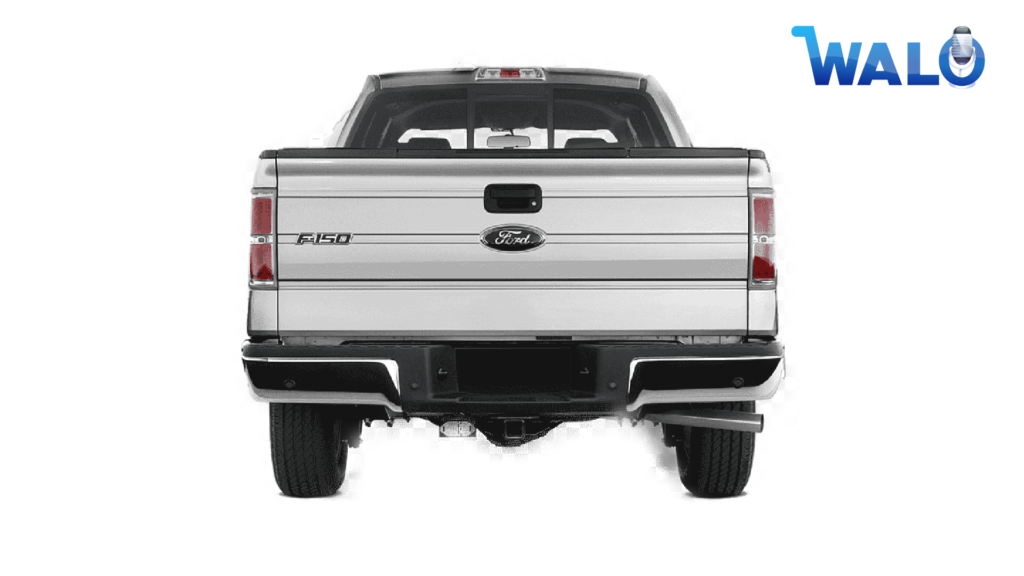
Según el informe policiaco, una persona se apropió de la compuerta de la parte posterior de una Ford modelo F-150, color blanco, del 2013.
La propiedad hurtada fue valorada en $1,632 por el querellante.
La División de Propiedad del Cuerpo de Investigaciones Criminales (CIC) de Carolina se hizo cargo de la investigación.