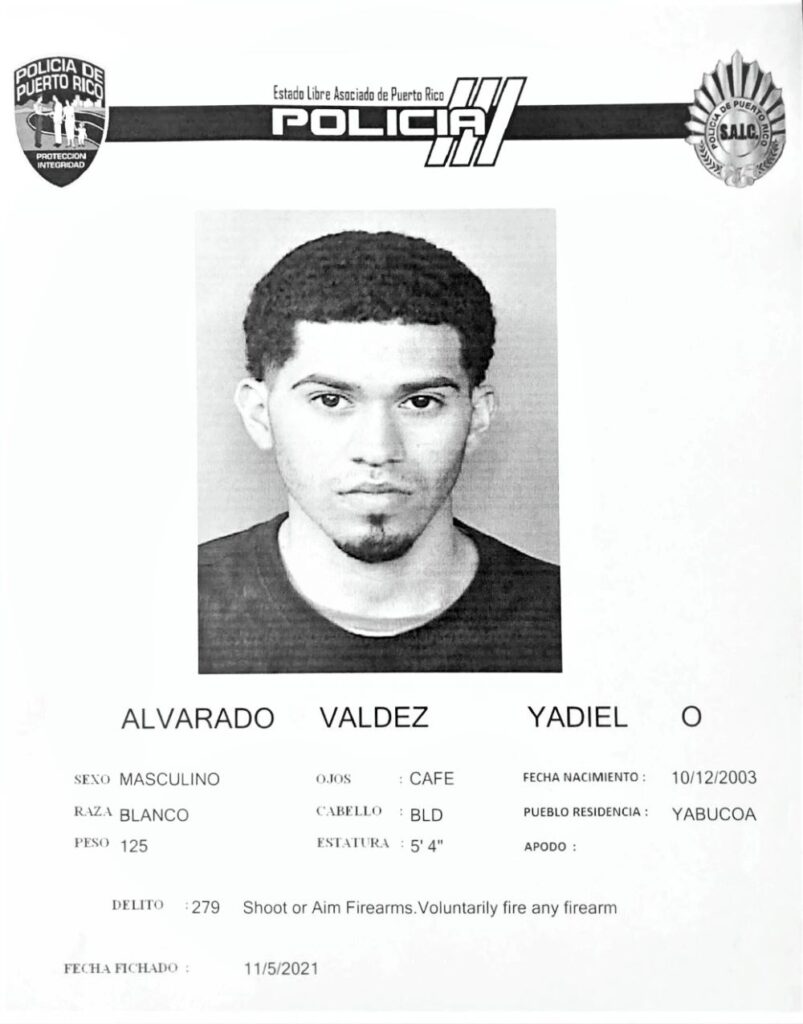

(5-noviembre-2021) El director operacional del Cuerpo de Investigaciones Criminales de Humacao, Félix R. Morales, informó sobre las radicaciones de cargos criminales por robo, daños y Ley de Armas contra Yadiel O. Alvarado Valdez de 18 años, de Yabucoa.
Los hechos ocurrieron en horas de la madrugada del 28 de octubre, en el estacionamiento del establecimiento comercial Walgreens ubicado en el desvio Nicanor Vázquez en Humacao, donde Alvarado Valdez en conjunto a otros individuos cometieron el delito de carjacking.
Why Low Deposit Gambling Is Growing in New Zealand, per 10DollarDepositCasinos
New Zealand’s online gambling market has undergone a quiet but significant transformation over the past several years. While the country’s regulatory framework has historically been cautious — shaped largely by the Gambling Act 2003 and subsequent amendments — consumer behaviour has shifted in ways that regulators and operators alike are still catching up with. One of the most telling indicators of this shift is the sustained growth in low deposit gambling, particularly at offshore-licensed casinos that accept deposits as small as ten New Zealand dollars. This trend is not accidental, nor is it simply a product of marketing. It reflects deeper economic, technological, and social dynamics that are reshaping how New Zealanders engage with online casino platforms.
The Economic Context Behind Smaller Deposits
To understand why low deposit gambling has gained traction in New Zealand, it helps to look at the broader economic environment. Between 2020 and 2023, New Zealand experienced a combination of inflationary pressure, rising housing costs, and stagnating wage growth that squeezed discretionary spending for many households. The Reserve Bank of New Zealand raised the Official Cash Rate multiple times across 2022 and 2023, pushing mortgage repayments higher and reducing the amount of money many consumers had available for leisure activities. In this context, entertainment options that offered flexibility and low financial commitment became more attractive.
Online gambling, particularly at platforms accepting minimum deposits of ten dollars or less, fit neatly into this pattern. A ten-dollar deposit does not represent a significant financial risk for most adults, but it does provide access to a full range of casino games, bonus offers, and the social experience of online play. For many New Zealanders, this represented a way to participate in a form of entertainment without committing to the larger deposits — often fifty to one hundred dollars — that were standard at many international platforms just a decade ago.
It is also worth noting that the New Zealand dollar, while relatively stable, has experienced periods of weakness against the US dollar and Euro, the currencies in which many offshore casinos price their services. A platform that advertises a ten-dollar minimum deposit in NZD is offering a genuinely accessible entry point, not a nominal one. This currency-aware accessibility has been a meaningful driver of adoption among players who might otherwise have bypassed online casinos entirely.
The growth of the gig economy in New Zealand has also played a role. A rising proportion of workers — particularly in cities like Auckland, Wellington, and Christchurch — earn income on irregular schedules through platforms like Uber, Deliveroo, or freelance contracting. For these workers, budgeting for entertainment is more fluid and variable than it is for salaried employees. Low deposit thresholds align well with this kind of financial flexibility, allowing players to fund sessions when income arrives rather than maintaining a standing balance at a casino.
Regulatory Gaps and the Offshore Casino Phenomenon
New Zealand’s gambling legislation has a structural feature that has significantly shaped the low deposit casino market. Under the Gambling Act 2003, it is not illegal for New Zealand residents to gamble at offshore online casinos — it is simply illegal for those casinos to be based in New Zealand and to offer services to New Zealand residents without a local licence. This distinction, sometimes called the “point of supply” model, means that the New Zealand government regulates domestic operators but has limited direct authority over the hundreds of offshore platforms that serve Kiwi players.
The practical consequence is that New Zealanders have access to a vast, largely unregulated international market. Platforms licensed in Malta under the Malta Gaming Authority, in Gibraltar, in Curaçao, or in the Isle of Man routinely accept New Zealand players. These jurisdictions have their own regulatory frameworks, but they vary considerably in their consumer protection standards, responsible gambling requirements, and enforcement capacity. The Curaçao licence, for instance, has historically been criticised for relatively light-touch oversight, while the Malta Gaming Authority operates one of the more rigorous international frameworks.
Within this international landscape, the ten-dollar deposit model has become a significant competitive differentiator. Offshore operators have recognised that New Zealand players — like players in Australia, Canada, and the United Kingdom — respond positively to low barrier entry. Platforms that have adopted this model have seen strong player acquisition numbers from New Zealand, partly because the domestic market, dominated by the state-owned TAB and Lotteries Commission, does not offer the same range of casino-style games. The gap between what New Zealanders can access domestically and what offshore platforms offer is substantial, and low deposit thresholds reduce the perceived risk of trying an unfamiliar offshore platform for the first time.
Detailed breakdowns of how these platforms structure their minimum deposit offers, and which banking methods support them, are documented at resources like www.10-dollar-deposit-casinos.com, where the specifics of deposit processing across different payment providers are laid out for New Zealand players navigating this market.
The regulatory gap has not gone unnoticed by New Zealand policymakers. The Department of Internal Affairs, which oversees gambling regulation in New Zealand, has acknowledged the challenges posed by offshore platforms. The Gambling (Harm Prevention and Minimisation) Amendment Act and various consultation processes in the early 2020s reflected growing awareness that the existing framework was not designed for the digital, borderless nature of modern online gambling. However, legislative change in this area moves slowly, and as of 2024, the fundamental structure — offshore platforms operating in a legal grey zone — remains intact.
Payment Technology and the Infrastructure of Accessibility
The growth of low deposit gambling in New Zealand cannot be explained by demand alone. Supply-side developments in payment technology have been equally important. In the early 2010s, making a small deposit at an online casino was genuinely cumbersome. Bank transfers were slow and often attracted fees that made small transactions uneconomical. Credit card processing was inconsistent, and many New Zealand banks were beginning to implement blocks on gambling-related transactions. The friction involved in funding a casino account with a small amount often outweighed the appeal of the deposit threshold itself.
That friction has been substantially reduced by the expansion of e-wallet services and, more recently, by the adoption of cryptocurrency payment options. Services like POLi, which allows direct bank transfers without sharing card details, became widely adopted in New Zealand precisely because they addressed the trust and convenience concerns that many players had about sharing financial information with offshore platforms. POLi transactions can be completed in minutes, and the service is compatible with most major New Zealand banks, including ANZ, ASB, BNZ, Westpac, and Kiwibank.
The rise of Visa and Mastercard prepaid cards has also been significant. These products, available at supermarkets and convenience stores across New Zealand, allow players to load a fixed amount — sometimes as little as twenty or thirty dollars — and use that card to fund a casino deposit without any connection to their primary bank account. For players who are managing their gambling spending carefully, or who simply prefer to keep their gambling activity separate from their main finances, prepaid cards offer a practical solution that aligns naturally with the low deposit model.
Cryptocurrency adoption, while still a minority payment method among New Zealand casino players, has grown steadily since around 2018. Bitcoin, Ethereum, and stablecoins like USDT have been embraced by a subset of players, particularly younger men in the 25-40 age bracket, who are comfortable with digital asset management and appreciate the speed and pseudonymity of crypto transactions. Several offshore platforms serving New Zealand have introduced crypto-specific deposit bonuses, and minimum deposit thresholds for crypto are often set at the equivalent of five to ten NZD, reinforcing the low barrier entry model.
Mobile payment infrastructure has also matured considerably. New Zealand’s smartphone penetration rate is among the highest in the Asia-Pacific region, and the majority of online casino sessions in the country now take place on mobile devices. This has pushed operators to optimise their deposit processes for mobile interfaces, reducing the number of steps required to fund an account and making the experience faster and more intuitive. When depositing ten dollars takes less than sixty seconds on a smartphone, the psychological and practical barriers to entry are minimal.
Changing Player Demographics and Attitudes Toward Risk
The demographic profile of New Zealand’s online casino player base has shifted meaningfully over the past decade, and these changes have both reflected and reinforced the growth of low deposit gambling. Research published by the New Zealand Ministry of Health as part of its ongoing gambling and addiction monitoring work has consistently shown that online gambling participation is highest among adults aged 18-34, with male players slightly overrepresented but female participation growing steadily. This cohort has grown up with digital commerce as a default, and their expectations around financial transactions are shaped by experiences with streaming services, app stores, and food delivery platforms — all of which emphasise low entry costs and easy cancellation.
For this demographic, the idea of depositing two hundred dollars into a new platform they have never used before is counterintuitive. It conflicts with the subscription-era logic of “try before you commit.” A ten-dollar deposit functions as a trial, a way to evaluate the platform’s game library, user interface, customer service responsiveness, and withdrawal speed before deciding whether to invest more. This is a rational approach to consumer decision-making, and platforms that recognise it have structured their low deposit offers accordingly — often pairing the minimum deposit with a matched bonus that gives new players additional funds to explore the platform.
The attitude toward risk among younger New Zealand players is also worth examining. Surveys conducted by organisations like the Problem Gambling Foundation of New Zealand have found that younger players are more likely to describe gambling as a form of entertainment rather than a potential income source, and more likely to set explicit session budgets before playing. This self-reported harm minimisation behaviour, while not universally practised, does suggest that the low deposit model resonates partly because it supports a “budget entertainment” framing of online casino play. Spending ten dollars on an evening of online slots is mentally categorised alongside spending ten dollars on a streaming rental or a takeaway coffee — a small, bounded leisure expense.
The influence of social media and content creator culture should not be underestimated either. Since approximately 2019, a significant ecosystem of gambling-related content has emerged on platforms like YouTube, Twitch, and TikTok, with creators based in New Zealand and internationally producing content that normalises online casino play and frequently references specific platforms and deposit amounts. This content reaches young New Zealanders directly and has contributed to awareness of low deposit options. Regulators have taken note — the Advertising Standards Authority in New Zealand has received an increasing number of complaints related to gambling content online, and the question of how to regulate influencer-driven gambling promotion is actively debated.
10DollarDepositCasinos and similar resources that catalogue and compare low deposit platforms have emerged partly in response to this information environment. Players who discover low deposit gambling through social media content often turn to structured comparison resources to evaluate their options before committing funds, and the existence of these resources has itself contributed to the normalisation and growth of the market segment.
The convergence of economic accessibility, regulatory architecture, payment technology, and demographic change has produced a low deposit gambling market in New Zealand that is both substantial and still growing. The country’s unique regulatory position — where offshore platforms operate freely but domestic options remain limited — means that international operators will continue to compete for New Zealand players, and low deposit thresholds will remain one of their primary tools for doing so. Whether New Zealand’s legislative framework will evolve to more directly address this market, through either expanded domestic licensing or stricter offshore blocking mechanisms, remains an open question. What is clear is that the ten-dollar deposit has moved from a niche offering to a mainstream expectation among a large and growing segment of New Zealand’s online gambling population, and the structural conditions that produced this shift show no signs of reversing in the near term.
Según se informó, ellos se hurtaron mediante intimidación y portando armas de fuego del vehículo Hyundai Tucson, color marrón. Posteriormente el vehículo fue recuperado en Naguabo.
El Agente Luis Zayas, supervisado por el Sargento Víctor Osorio adscritos a la División de Robos consultó el caso ante la Fiscal Sandra Cortez, presentando la prueba presentada ante la jueza Enid Rivera, quien determinó causa para arresto, señalando una fianza de $180,000.00, la cual no fue prestada hasta el día de la vista preliminar.