 Foto: Archivo/WALO Radio
(22 de agosto de 2018) – Un video viral sobre la persecución de un individuo que conducía un auto con luces parecidas a las patrullas del Negociado de la Policía de Puerto Rico, alertó a miembros de las Comandancias de Humacao y Caguas a mantener una mayor vigilancia en las autopistas correspondientes.
El comandante del área de Humacao, Manuel de Jesús Treskow, y la comandante auxiliar del área de Caguas, Marilyn Castro Ocaña, comentaron el plan de acción para evitar riesgos en la seguridad de aquellos ciudadanos que transitan en las noches por los expresos PR-52 y PR-30.
Castro mencionó que la Policía intervino con uno de los autos reportados de los mensajes virales de redes sociales, sin tener resultado alguno sobre incidencias delictivas. Sin embargo, a modo de prevención la uniformada comenzó a vigilar sospechosos con este tipo de luces en las vías principales del área de Caguas e implementaron la publicación de material didáctico en los centros comerciales.
Además, de Jesús aseguró que los distritos y áreas policiacas en Humacao mantienen activo un plan de trabajo para identificar sujetos que conduzcan vehículos con este tipo de luces con la intención de cometer asaltos o carjackings.
How Canadian Regulators Are Shaping No Deposit Bonus Rules: A Casizoids Overview
Canada’s approach to online gambling regulation has never followed a single unified path. Unlike countries with centralized federal oversight, Canada distributes gambling authority primarily among its provinces, creating a regulatory patchwork that directly influences how operators structure promotional offers — including no deposit bonuses. Over the past several years, provincial gaming authorities have moved with increasing deliberateness to define what constitutes a fair, transparent, and legally permissible bonus, and those definitions are reshaping the market in ways that both players and operators are still absorbing. Understanding the mechanics of this regulatory evolution matters not just for legal compliance, but for anyone trying to evaluate the actual value of a promotional offer in the Canadian market.
The Provincial Framework and Its Impact on Bonus Structures
Canada’s Constitution Act of 1867 assigned jurisdiction over gambling to the provinces, and that foundational decision continues to define the regulatory landscape today. Each province operates through its own gaming authority — the Alcohol and Gaming Commission of Ontario (AGCO), the British Columbia Lottery Corporation (BCLC), the Alberta Gaming, Liquor and Cannabis Commission (AGLC), and others — and each has developed its own standards for how online casinos may advertise and distribute promotional bonuses.
Ontario’s iGaming market, which opened to private operators in April 2022 under the iGaming Ontario framework, represents the most significant recent development in Canadian gambling regulation. The AGCO’s Registrar’s Standards for Internet Gaming, updated in conjunction with the market launch, introduced explicit requirements around responsible advertising, bonus terms disclosure, and player protection. Operators licensed in Ontario are required to present bonus terms in plain language, ensure that wagering requirements are prominently disclosed before a player opts into a promotion, and avoid advertising that could be construed as misleading about the nature or value of a bonus offer.
No deposit bonuses — offers that grant players a small amount of real or bonus currency without requiring an initial deposit — fall under particular scrutiny in this framework. Because these offers are frequently used as acquisition tools, regulators have focused on ensuring that the conditions attached to them are not buried in fine print. The AGCO specifically requires that material terms, including maximum withdrawal limits and playthrough requirements, be disclosed at the point of promotion rather than only in extended terms and conditions documents. This requirement has forced operators to restructure how they present these offers across their Ontario-facing platforms.
Wagering Requirements, Withdrawal Caps, and Regulatory Expectations
One of the most consequential areas of regulatory attention involves the relationship between wagering requirements and withdrawal caps on no deposit bonuses. Historically, some operators offered no deposit bonuses with headline values of $20 to $50 CAD but attached wagering requirements of 60x or higher, combined with maximum cashout limits of $50 CAD regardless of winnings generated. Canadian regulators, particularly in Ontario, have signaled that such structures may conflict with fairness standards embedded in the AGCO’s framework, specifically the principle that promotional offers must not be structured in ways that are “deceptive or misleading.”
The AGCO’s 2022 and 2023 enforcement communications made clear that operators must ensure a reasonable relationship between the stated value of a promotion and its realistic achievable value. While the regulator has not mandated specific wagering requirement caps, the broader consumer protection obligations under Ontario’s framework create implicit pressure toward more reasonable terms. Industry analysts have noted a measurable shift in the Ontario market between 2022 and 2024, with average wagering requirements on no deposit bonuses declining from the 40–60x range common before regulation to a more typical 25–35x range among licensed operators.
Tracking how specific operators implement these standards in practice is part of what resources like Casizoids have focused on. The page at http://www.casizoid.org/free-20-cad-no-deposit-bonus/ documents the terms attached to a $20 CAD no deposit offer, including wagering requirements and withdrawal conditions, providing a concrete reference point for evaluating how such offers are structured under current market conditions. This kind of granular documentation is particularly useful given that regulatory requirements mandate disclosure but do not standardize the format in which that disclosure appears across different operator platforms.
British Columbia and Alberta have taken somewhat different approaches. The BCLC operates PlayNow.com as the province’s primary licensed online platform and does not permit private operators to offer real-money gambling to BC residents, which effectively limits the no deposit bonus market in that province to a single operator with its own promotional policies. Alberta, by contrast, has not moved to open a competitive iGaming market on Ontario’s model, leaving many Alberta residents accessing offshore or gray-market platforms where provincial standards do not apply. This jurisdictional inconsistency means that the regulatory protections governing bonus terms vary significantly depending on where a Canadian player is located.
Responsible Gambling Requirements and Bonus Eligibility Restrictions
A less-discussed but increasingly important dimension of Canadian bonus regulation involves the intersection between responsible gambling programs and promotional eligibility. Ontario’s iGaming framework requires licensed operators to integrate with the GameSense responsible gambling program and to maintain systems that can identify players who have self-excluded or set deposit limits. The regulatory implication for no deposit bonuses is direct: operators are prohibited from offering or extending bonuses to players who have activated responsible gambling tools that restrict promotional contact.
This requirement has technical and operational implications that go beyond simple compliance checkboxes. Operators must maintain real-time integration between their CRM and promotional distribution systems and their responsible gambling infrastructure. A player who sets a deposit limit or activates a cooling-off period must be automatically excluded from receiving no deposit bonus offers, even if those offers are delivered through third-party affiliate channels. The AGCO has indicated in its 2023 operator guidance that affiliate-delivered promotions are subject to the same standards as operator-delivered promotions, placing additional compliance obligations on the affiliate marketing ecosystem.
Casizoids, as a platform that aggregates and documents bonus offers in the Canadian market, operates within this affiliate context. The responsible gambling compliance requirements that apply to how offers are presented and to whom they may be marketed represent a meaningful constraint on how affiliate content can be structured, particularly when it comes to no deposit offers targeted at new players. Platforms that document these offers must navigate the same disclosure obligations that apply to operators, ensuring that any bonus terms presented are accurate, current, and accompanied by appropriate responsible gambling messaging.
The AGCO’s enforcement record since the 2022 market opening provides some indication of how seriously these requirements are being applied. By the end of 2023, the AGCO had issued compliance notices to multiple licensed operators related to advertising standards, including cases involving promotional offers that did not meet disclosure requirements. While none of these public enforcement actions specifically targeted no deposit bonus structures, the pattern of enforcement activity signals that bonus-related advertising is within the scope of active regulatory scrutiny rather than a peripheral concern.
Where Canadian Regulation Is Heading: Federal Signals and Provincial Convergence
The longer-term trajectory of Canadian gambling regulation points toward greater federal engagement and potential convergence of provincial standards. Bill C-218, which received Royal Assent in August 2021, legalized single-event sports betting across Canada and prompted a broader federal conversation about the appropriate scope of gambling regulation. While the bill itself addressed sports betting rather than casino bonuses, it demonstrated that Parliament is willing to engage with gambling policy in ways that could eventually affect the broader online casino market, including promotional practices.
There is growing discussion among Canadian gaming law practitioners about whether a national framework for online gambling standards — potentially modeled on the UK Gambling Commission’s approach — would be appropriate for Canada. The UK’s experience is instructive: the UKGC introduced explicit bonus term fairness standards in 2019, including requirements that wagering requirements be clearly disclosed and that terms not be structured in ways that make it “significantly difficult” for players to withdraw winnings. Canadian regulators have been attentive to UK developments, and several provisions of Ontario’s iGaming standards reflect principles similar to those embedded in UKGC guidance.
If federal engagement increases, the current provincial patchwork — in which a no deposit bonus offered to an Ontario player operates under materially different regulatory conditions than the same offer extended to a player in Alberta or British Columbia — would likely face pressure toward harmonization. For operators, this would mean developing bonus structures that meet the highest existing provincial standard rather than calibrating offers to the least restrictive applicable jurisdiction. For players, it would mean more consistent protections regardless of province of residence.
The evolution of Canadian no deposit bonus regulation reflects a broader maturation of the country’s online gambling market. The opening of Ontario’s competitive iGaming market in 2022 established a meaningful regulatory baseline that has already influenced operator behavior in demonstrable ways, from how wagering requirements are disclosed to how responsible gambling tools interact with promotional eligibility. The work of documenting and analyzing these offers — tracking how terms change as regulatory expectations shift — provides an important layer of market transparency that complements formal regulatory oversight. As other provinces consider whether to follow Ontario’s model, the standards currently being applied in that market are likely to serve as the template against which future Canadian bonus regulation is measured.
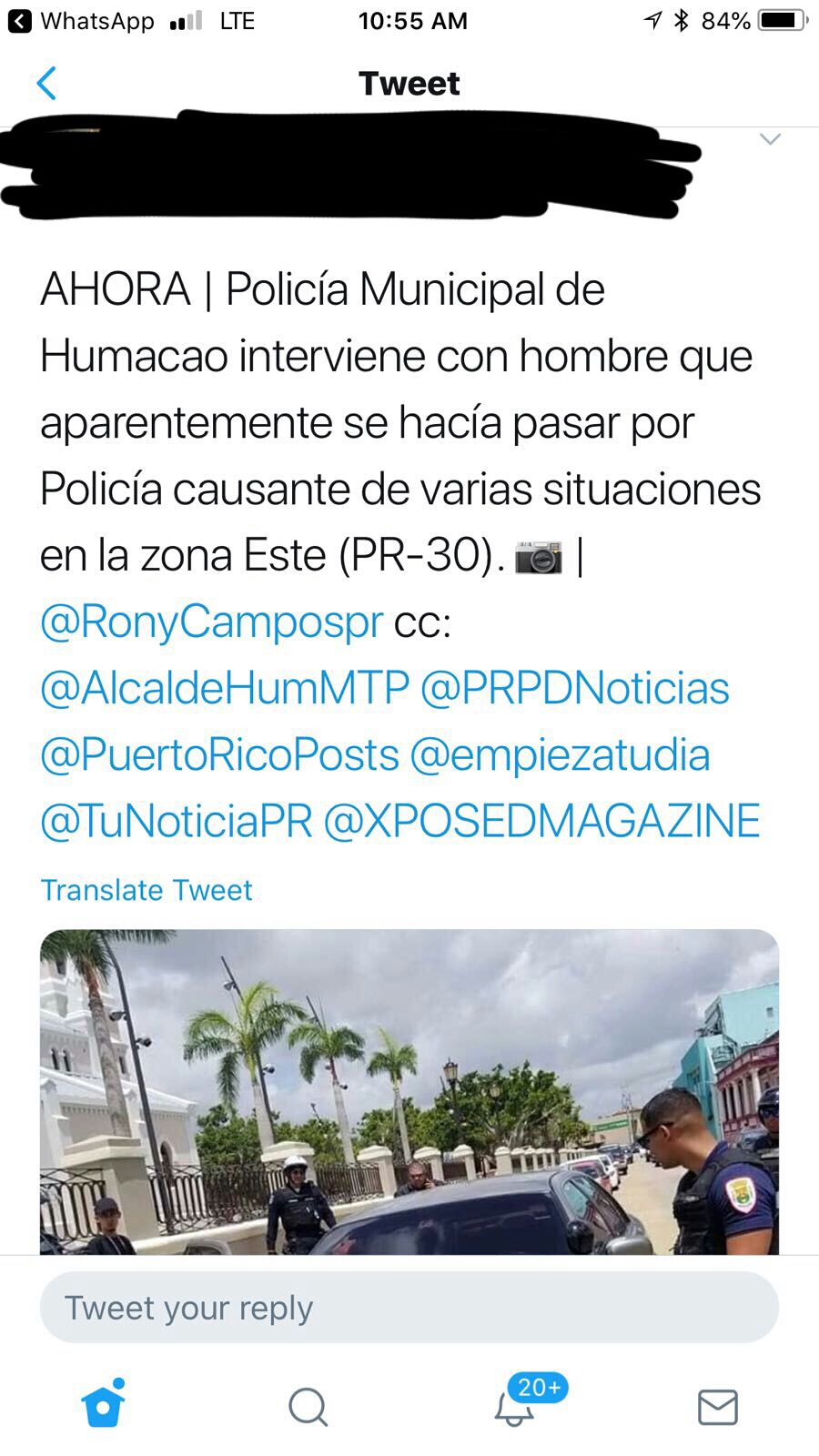
Varios usuarios de Twitter y Facebook difundieron hoy una fotografías de la Policía municipal de Humacao cuando supuestamente intervino a un hombre que se hacía pasar por oficial en el expreso PR-30 montado en un auto gris claro.
Las fotos que circulan en redes sociales pertenecen a un caso aislado del pasado 8 de junio, y no, al sujeto que aparentemente usurpa el puesto de un agente para cometer delitos, confirmó WALO Radio con oficiales municipales.
Fotos y video: