 Archivo
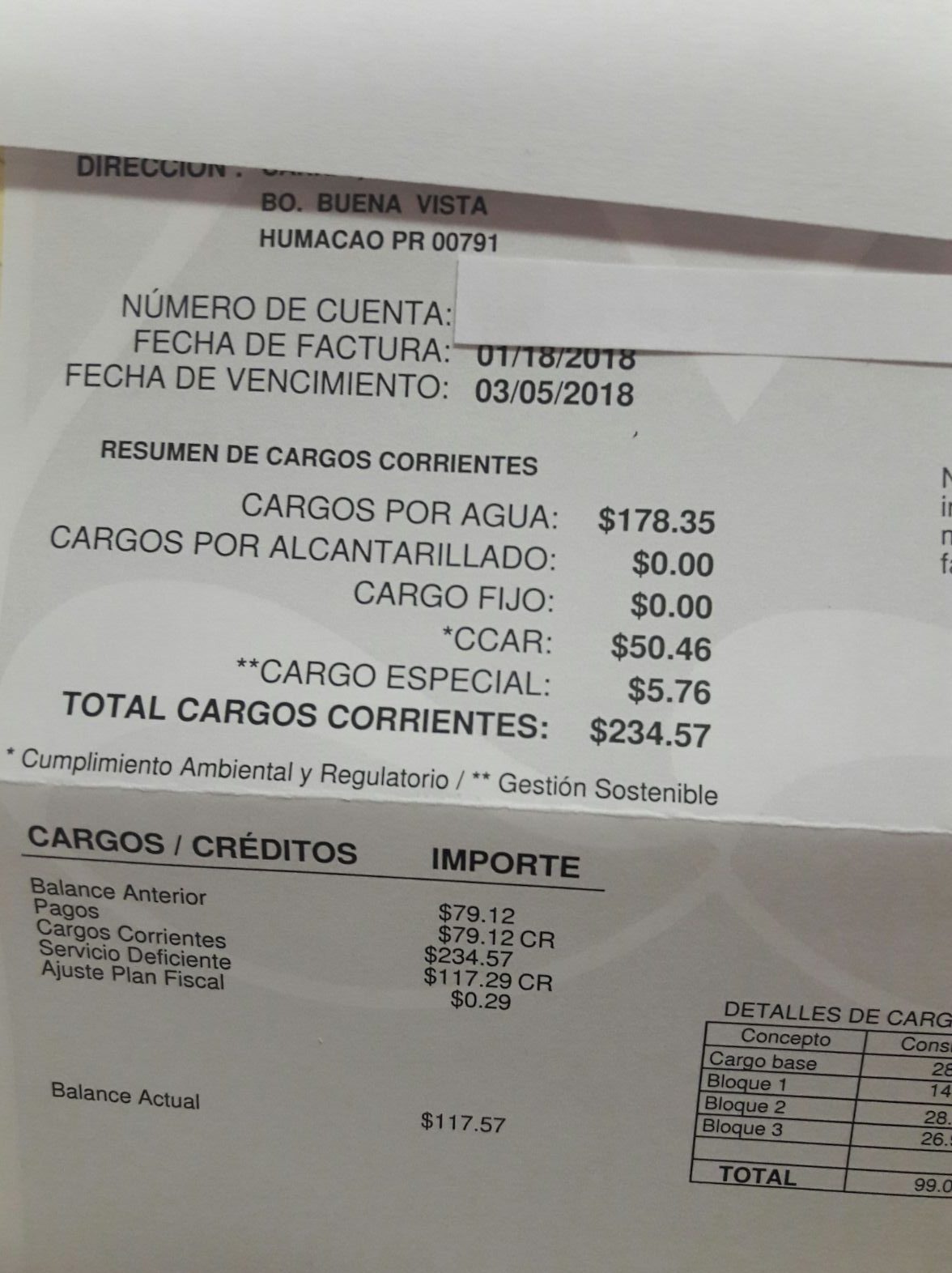
(31 de enero de 2018) – La lectura de contadores comenzó “por estimado” desde el pasado 15 de noviembre luego de la crisis María.
Según la directora de Servicio al Cliente de la Autoridad de Acueductos y Alcantarillados (AAA), Melissa Rodríguez, la factura vigente tendrá un cargo por cuatro meses incluyendo un periodo previo y dos meses posteriores al huracán.
Rodríguez exhortó a los clientes en examinar las fechas de consumo versus la cantidad de días facturados antes de realizar el pago o considerar un ajuste.
How Casinosforusdt Explains USDT’s Growing Role in Canadian Online Gambling
The use of Tether (USDT) in online gambling has shifted from a niche curiosity to a measurable trend across Canadian-facing platforms over the past several years. Unlike Bitcoin or Ethereum, which carry significant price volatility, USDT maintains a stable one-to-one peg with the US dollar, making it functionally closer to a digital bank transfer than a speculative asset. This characteristic has made it particularly attractive to Canadian players who want the transactional speed and privacy benefits of cryptocurrency without the financial uncertainty of holding a volatile coin while wagering. The trajectory of USDT adoption in Canadian online gambling reflects broader changes in how payment infrastructure, regulatory ambiguity, and player behavior intersect in one of North America’s most active iGaming markets.
The Canadian Regulatory Landscape and Why It Creates Space for USDT
Canada’s approach to online gambling has long been characterized by jurisdictional fragmentation. Under the Criminal Code of Canada, provinces hold authority over gambling regulation, which has produced a patchwork of legal frameworks. British Columbia, Ontario, Quebec, and Manitoba each operate provincially licensed online gambling platforms through their respective lottery corporations — BCLC, OLG, Loto-Québec, and MBLL. However, the federal code does not explicitly prohibit Canadians from accessing offshore or internationally licensed gambling sites, a legal gray zone that has persisted for decades and that millions of Canadian players continue to exploit.
Ontario changed the calculus significantly in April 2022 when it launched its regulated iGaming market under iGaming Ontario, a subsidiary of the Alcohol and Gaming Commission of Ontario (AGCO). This framework allowed private operators to apply for licenses and legally serve Ontario residents, bringing dozens of internationally recognized brands into a regulated domestic structure. However, the licensing conditions around payment methods remain tied primarily to traditional banking rails and established e-wallets. Cryptocurrency, including USDT, occupies an undefined position in this framework — not explicitly banned, but not formally accommodated either. This ambiguity means that many operators serving Canadian players outside Ontario’s regulated market, and even some operating at its edges, continue to accept USDT as a deposit and withdrawal method without regulatory interference.
This environment has made Canada one of the more active markets for USDT-accepting gambling platforms in the English-speaking world. The absence of a blanket federal prohibition on offshore gambling, combined with the slow pace of provincial regulatory expansion beyond Ontario, means that a substantial portion of Canadian online gambling activity continues to occur on platforms that are licensed in jurisdictions such as Malta, Curaçao, Gibraltar, or the Isle of Man. These operators, unconstrained by provincial payment rules, have been among the first to integrate USDT as a standard payment option.
From a player perspective, the appeal is straightforward. Canadian banks have historically been inconsistent in processing gambling-related transactions. Some financial institutions flag and decline deposits to gambling merchants, particularly those operating offshore. USDT transfers bypass this friction entirely — they route through blockchain infrastructure rather than the traditional banking network, meaning a player’s bank has no visibility into the nature of the transaction. This is not a mechanism for money laundering, which is a separate and serious compliance concern handled at the platform level, but rather a practical workaround for the inconsistent and often arbitrary blocking behavior of Canadian retail banks when it comes to legal leisure spending.
How USDT Functions Differently From Other Cryptocurrencies in a Gambling Context
Understanding why USDT has gained traction specifically — as opposed to Bitcoin, Litecoin, or other cryptocurrencies that gambling platforms have supported for longer — requires looking at the mechanics of how players actually interact with gambling balances. When a player deposits Bitcoin at a casino that denominates its games in fiat currency, the platform must perform a conversion at the point of deposit. The player’s account then holds a fiat-equivalent balance, and the original Bitcoin holding is effectively liquidated. If the player wants to withdraw in Bitcoin, the platform performs a reverse conversion. This creates two points of exchange-rate exposure, and depending on market conditions, the player may receive meaningfully more or less than they deposited in real-value terms.
USDT eliminates this problem because its value is stable. A player who deposits 500 USDT knows their gambling balance will be worth $500 USD, and when they withdraw, 500 USDT will still be worth approximately $500 USD. For players who are not interested in cryptocurrency as an investment but simply want a fast, low-friction payment method, this stability is decisive. The transaction confirmation times on the Tron network (TRC-20 USDT), which is the most commonly used blockchain for gambling-related USDT transfers due to its low fees, are typically under a minute, and withdrawal processing on most platforms takes between a few minutes and a few hours — substantially faster than bank wires, which can take three to five business days in Canada.
The growth of USDT in Canadian online gambling has been tracked and analyzed by several specialized resources in the iGaming space. Casinosforusdt, a platform that focuses specifically on USDT-accepting gambling sites, has documented how Canadian player adoption of USDT as a primary payment method has accelerated since 2021, with particular growth in the 25-to-40 demographic that is comfortable with digital wallets but cautious about volatile crypto assets. This pattern aligns with broader fintech adoption trends in Canada, where services like Wealthsimple and Interac e-Transfer have conditioned a generation of users to expect near-instant digital money movement.
It is also worth noting the fee structure. Canadian players using credit cards or e-wallets like Skrill or Neteller at offshore gambling sites frequently encounter currency conversion fees, since most offshore platforms price their games in USD or EUR. A Canadian player depositing in CAD via credit card may face a foreign transaction fee from their bank (typically 2.5 to 3 percent) plus any conversion spread applied by the platform. USDT, being pegged to USD, eliminates the currency conversion issue for players who acquire USDT through a Canadian exchange like Bitbuy, NDAX, or Coinsquare — they convert CAD to USDT once, at a competitive rate, and then transfer to the gambling platform without further conversion charges. Over time and across multiple sessions, this fee differential becomes meaningful.
Platform-Level Integration and the Mechanics of USDT Gambling Operations
From the operator side, integrating USDT as a payment method involves a different set of considerations than integrating a traditional payment processor. Conventional payment processing agreements require operators to maintain merchant accounts with acquiring banks, comply with card scheme rules (Visa and Mastercard have specific policies around gambling merchants), and navigate chargeback risk. USDT transactions are irreversible by design — once confirmed on the blockchain, a transfer cannot be reversed by the sender or any intermediary. This eliminates chargeback fraud, which is a significant operational cost for gambling operators accepting credit cards. The irreversibility also means operators can credit player accounts faster, since there is no risk of the deposit being recalled.
Operators typically use one of two approaches for USDT integration. The first is a custodial model, where the platform maintains its own hot wallets and processes deposits and withdrawals internally, converting to fiat on the backend for game settlement. The second is a non-custodial or semi-custodial model, where the platform partners with a crypto payment processor such as CoinsPaid, B2BinPay, or TripleA, which handles the wallet infrastructure and provides the operator with a fiat-equivalent settlement. The custodial model gives operators more control and potentially lower transaction costs at scale, but requires significant technical infrastructure and security investment. The processor model is more accessible for smaller or newer platforms but involves per-transaction fees that eat into margins.
For Canadian-facing operators specifically, the choice of model also has compliance implications. Platforms accepting Canadian players are expected to comply with Canada’s Proceeds of Crime (Money Laundering) and Terrorist Financing Act (PCMLTFA) to the extent they have a Canadian nexus, and the Financial Transactions and Reports Analysis Centre of Canada (FINTRAC) has increasingly extended its oversight to virtual currency businesses. Offshore operators without a Canadian corporate presence are in a more ambiguous position, but responsible platforms have generally adopted know-your-customer (KYC) and anti-money-laundering (AML) procedures that apply regardless of payment method. USDT deposits above certain thresholds typically trigger identity verification requirements on well-run platforms, consistent with the same standards applied to fiat deposits.
The game selection available to USDT depositors has also expanded substantially. In the early years of crypto gambling, Bitcoin casinos often ran proprietary game libraries with limited third-party integration. Today, platforms accepting USDT typically offer the same game catalog as their fiat-accepting counterparts — including titles from major software providers like Evolution Gaming for live dealer games, Pragmatic Play for slots, and NetEnt for classic casino content. This parity in game access removes one of the historical barriers to crypto gambling adoption: the perception that crypto-accepting sites offered an inferior or restricted product.
Trends Shaping USDT’s Future Role in Canadian iGaming
Several converging trends suggest that USDT’s role in Canadian online gambling will continue to grow rather than plateau. The first is the ongoing expansion of provincial regulation. As more provinces follow Ontario’s model and create regulated domestic markets, the question of how cryptocurrency fits into licensed iGaming frameworks will become unavoidable. Ontario’s AGCO has already signaled awareness of the crypto payment question, and it is plausible that within the next several years, regulated Ontario operators will be permitted — or required — to offer compliant cryptocurrency payment options. When that happens, USDT’s stability relative to other cryptocurrencies will likely make it the default choice for regulatory accommodation.
The second trend is the maturation of stablecoin infrastructure in Canada. The Canadian Securities Administrators (CSA) issued guidance in 2023 clarifying that value-referenced crypto assets (effectively stablecoins including USDT) are subject to securities law in certain contexts, particularly when offered by crypto trading platforms. This regulatory attention has pushed Canadian exchanges toward more rigorous compliance frameworks, which paradoxically increases the legitimacy and accessibility of USDT for ordinary consumers. As acquiring USDT through regulated Canadian exchanges becomes more straightforward and consumer-protected, the friction involved in using it for online gambling decreases.
The third factor is generational. Younger Canadian adults who grew up with digital-native financial services are significantly more comfortable with cryptocurrency than older demographics. Survey data from the Bank of Canada’s annual Financial System Survey has consistently shown rising awareness and ownership of cryptocurrency among Canadians under 35. As this demographic ages into the core gambling-age cohort (typically defined as 25 to 54 for marketing purposes), their payment preferences will shape operator decisions about which methods to prioritize. Platforms that have already built USDT infrastructure are positioned to serve this cohort without requiring significant additional investment.
There is also a competitive dynamic at play. The Canadian online gambling market is intensely competitive, particularly since Ontario’s regulated market opened and attracted dozens of licensed operators. Differentiation on payment methods — including the speed and privacy benefits of USDT — has become a legitimate competitive lever. Operators that offer fast, fee-light USDT withdrawals can market this as a concrete product advantage over competitors relying solely on bank transfers or e-wallets. As player reviews and comparison resources increasingly highlight withdrawal speed as a key quality metric, USDT’s structural advantages in this area translate directly into competitive positioning.
The convergence of regulatory evolution, demographic shift, and competitive pressure makes USDT’s trajectory in Canadian online gambling one of the more predictable developments in the broader iGaming payment landscape. What began as an option for technically sophisticated players comfortable navigating crypto wallets has become an increasingly mainstream payment method that addresses real friction points in the Canadian gambling payment experience. The stability that distinguishes USDT from other cryptocurrencies — the feature that once made it seem less exciting to crypto enthusiasts — turns out to be precisely what makes it suitable for gambling, where players want predictable value rather than speculative exposure. As the infrastructure around USDT matures and regulatory frameworks gradually accommodate it, its share of Canadian online gambling transaction volume is likely to grow in a sustained and structurally grounded way rather than through the boom-and-bust cycles that have characterized other cryptocurrency adoption stories.
Lea la noticia sobre la factura del AAA a un consumidor de Humacao sin el servicio. Aquí.
https://www.facebook.com/waloradio/posts/10155240546062548
Los consumidores pueden realizar sus pagos en las oficinas de Caguas, Fajardo y Humacao.